
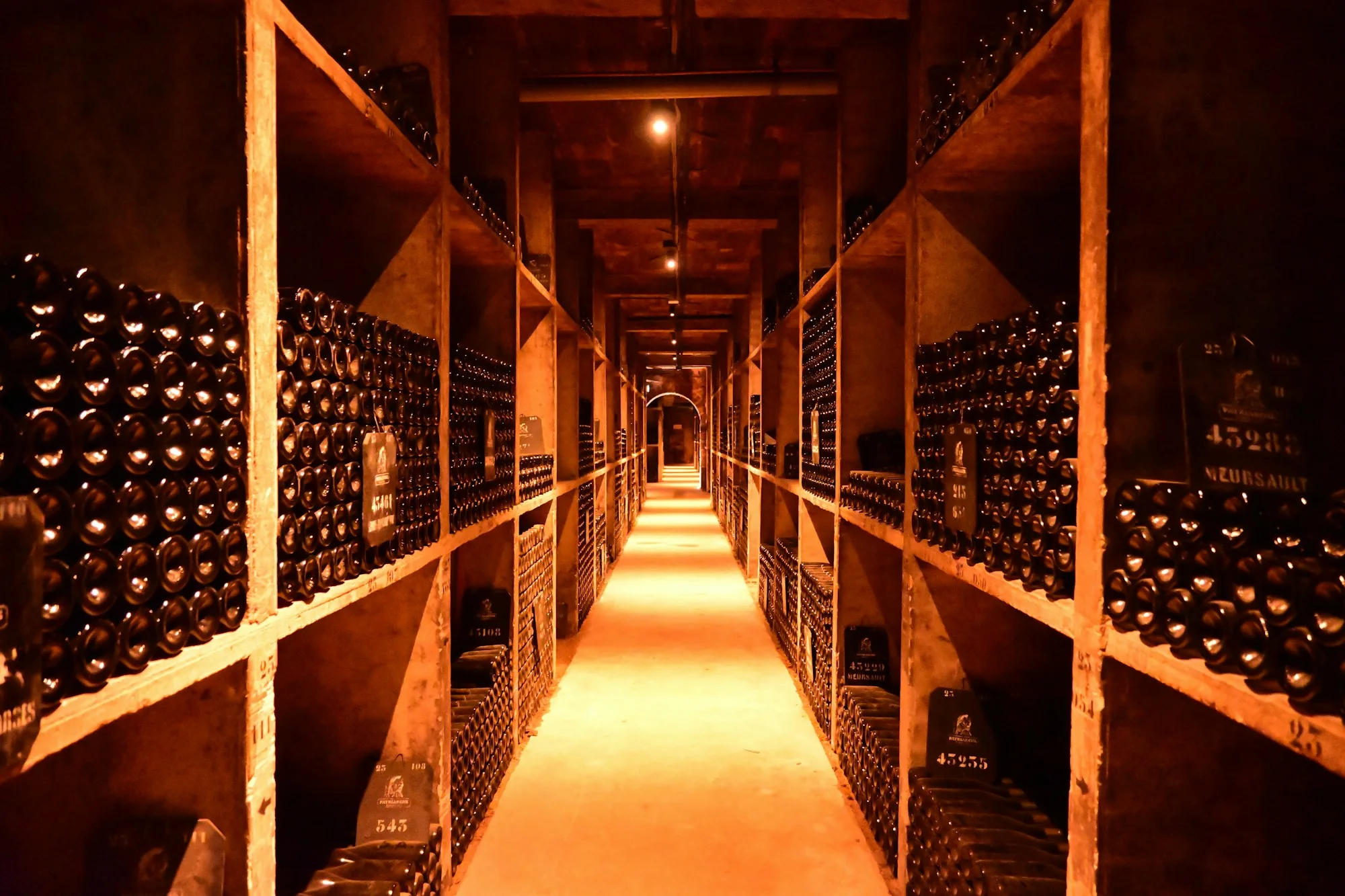
Create a restrained care plan for residential wine rooms that protects labels, racks, airflow, and the settings chosen by your cellar professional.
A residential wine cellar is both a collection space and a controlled environment. Cleaning should not change temperature, humidity, ventilation, lighting, alarms, or bottle orientation. Those settings belong to the cellar-system manufacturer, a wine-storage professional, or the collection manager, and their written guidance should lead the plan.
Before a visit, define which areas are accessible and who may move bottles. In most cases, cleaners should work around the collection rather than reorganize it. Inventory, valuation, bottle rotation, label handling, and rack loading are separate responsibilities that should remain with the owner or an authorized cellar specialist.

Use unscented, low-residue products approved for the floor, cabinetry, metalwork, or sealed surface being cleaned. Avoid aerosols, fragrance diffusers, bleach fumes, and improvised odor treatments. Apply product to the cloth when the instructions allow, use minimal moisture, and never spray near bottles, labels, corks, controls, or unfinished wood.
Dust accessible ledges, empty display surfaces, and the exterior of stable racks without leaning on or vibrating them. Do not pull bottles forward to reach behind a rack, and do not wipe fragile or damp labels. If residue, mold-like growth, pests, corrosion, or water intrusion appears, pause the cleaning and ask the appropriate cellar, building, or collection professional to inspect it.
Cooling equipment, drains, filters, condensate lines, sensors, and electrical components need service according to the manufacturer's schedule. A cleaner can keep the surrounding accessible area free of ordinary dust but should not open panels, change settings, clear internal lines, or silence an alarm.
Recurring Cleaning can include the adjacent tasting room and safely accessible cellar surfaces under a documented no-touch plan. Post-Event Refresh can restore gathering areas after a tasting, while bottle return, climate adjustment, and equipment maintenance stay with authorized specialists. That separation preserves both the atmosphere of the room and accountability for the collection.
Define authority around the collection and the room
A wine cellar cleaning plan begins with ownership of decisions. Name the person responsible for the collection, the person responsible for the cooling system, and the property contact who can approve access or additional work. In some homes those roles belong to one owner; in others they may involve a cellar manager, sommelier, estate team, HVAC contractor, security provider, and cleaning lead. Record who may move a bottle, open a case, reorganize a rack, silence an alarm, or adjust a setting.
The cleaning scope should never grant those permissions by implication. It should identify ordinary architectural surfaces that may be maintained and collection zones that remain restricted, including locked cabinets, display shelves, shipping cases, tasting inventory, and bottles awaiting professional cataloguing or appraisal. Complete the first walkthrough with the collection professional present, using the actual tools and route so written permissions correspond to the physical clearances the team will encounter.
Create a room plan that is useful without exposing confidential collection data. A cleaner may need rack locations, safe clearances, fragile label zones, and instructions for a dropped object, but usually does not need purchase prices, provenance, access codes, or a complete high-value inventory. Keep sensitive records in the collection system and give vendors only the information required for their role.
Note whether cameras, alarms, vibration sensors, leak detection, or environmental monitors are present, then instruct the team not to cover, reposition, test, or clean those devices without approval. When cases arrive, bottles move, or a tasting setup changes the room, update the access plan before the next service instead of relying on a verbal correction at the cellar door. Give each revision a date, approver, and brief change note, then withdraw superseded copies so a returning cleaner never follows yesterday’s route through today’s collection.
Protect environmental stability while people work
The collection professional and equipment manufacturer should determine temperature, humidity, ventilation, and lighting targets; the cleaner’s responsibility is to avoid disturbing them. Schedule work for a period when the door can remain closed as much as practical, and stage supplies outside so repeated trips do not create unnecessary exchange with the adjoining space. Do not prop the door open for convenience, change the thermostat, redirect a grille, switch off cooling, or add a portable heater, fan, dehumidifier, or air purifier.
If the room feels unusually warm, humid, dry, or odorous, stop and notify the property contact. A sensation is a reason to investigate, not permission to recalibrate a specialized system. Agree on crew size, expected duration, and a nearby staging point in advance, because crowding and repeated door cycles can undermine an otherwise careful low-disturbance method.
Use methods that introduce little heat, moisture, vibration, or airborne residue. Avoid steam equipment, hot water, aerosol products, powered polishers, loud blowers, and vigorous sweeping. Bring only clean, compact tools approved for the floor and accessible furnishings, then remove them when the work is complete. Monitor the doorway for condensation and keep liquids in stable, closed containers placed away from racks and electrical equipment.
If an environmental alarm activates, follow the property’s notification plan without muting it or guessing at the cause. The cooling technician, cellar designer, or collection manager should evaluate recurring condensation, frost, water, noise, or unstable readings. Surface cleaning cannot solve an equipment or building-envelope condition. Trial the selected dry method in an accessible noncollection zone, confirming that the tool does not scatter dust, shed material, or direct exhaust toward labels and rack openings.
Keep bottle handling separate from housekeeping
A bottle that appears easy to move may have a fragile label, sediment, wax closure, compromised capsule, unusual shape, or position chosen for collection reasons. Cleaning teams should work around bottles unless an authorized collection person has prepared a specific handling sequence. Do not rotate labels forward, tighten racks, group vintages, remove dust from glass, or place bottles temporarily on the floor. Gloves do not eliminate the risk of impact, label abrasion, or an unstable grip, and they can reduce tactile control.
If access behind a bottle is necessary, defer the area until the collection manager moves it. The small amount of dust left in a restricted space is preferable to an undocumented change in a valued collection. Show restricted shelves on the room plan and maintain a visible tool buffer, preventing a vacuum attachment, cloth edge, sleeve, or container from entering the bottle line unintentionally.
Shipping materials and empty bottles also require direction. Original wooden cases, tissue, capsules, presentation boxes, and paperwork may be part of the collection rather than waste. Establish a clearly marked disposal zone and remove nothing else. Broken glass should be isolated using the property’s safety procedure, with the collection contact deciding what to retain or document.
If a rack seems loose, bowed, damp, or overloaded, do not brace it, unload it, or test its fasteners. Restrict the area and call the cellar installer or qualified contractor. Housekeeping can report a condition with precision, but rack engineering, inventory movement, label conservation, and bottle assessment remain specialist responsibilities. Before waste leaves, have the designated household contact inspect the disposal zone when valuable packaging or event materials could be confused with ordinary cartons, paper, or empty glass.
Choose low-odor care for every architectural finish
Cellar finishes may include sealed or unfinished wood, stone, tile, concrete, metal, glass, cork, leather, paint, acoustic material, and custom cabinetry. Identify each surface before selecting a product, and use manufacturer guidance rather than a generic natural-cleaning recipe. Keep the method low-residue and unscented, apply liquid to a cloth when permitted, and use the minimum moisture needed for ordinary soil.
Do not introduce vinegar, essential oils, chlorine fragrance, furniture polish, wax, or odor absorbers simply because the room smells enclosed. Products can linger in a compact environment, migrate to porous materials, and complicate the diagnosis of a mechanical, drainage, moisture, or spoilage concern. Maintain a cellar-specific product and cloth log so a substitute team can verify what entered the room, where it was used, and whether any material restriction changed.
Work from accessible upper surfaces to the floor without reaching across bottles or resting tools on racks. Use separate cloths for glass, metal, wood, and floor details so grit and product do not transfer between finishes. Raw wood, historic casework, specialty stone, and corroded metal may need a conservator, fabricator, or finish specialist before any damp method is approved.
Visible growth, persistent dampness, pests, staining below a cooling unit, mineral deposits, or a musty change should be documented and escalated; do not scrub it away or conceal it with scent. Cleaning can restore an approved surface, but it should not erase evidence needed to find the source of a cellar condition. Describe the pattern, extent, and exact location in neutral terms, avoiding a diagnosis that could send the wrong trade to a moisture, material, pest, or equipment issue.
Plan tasting service without compromising the cellar
A tasting brings glassware, water, food, linens, decanters, floral material, candles, and guest traffic close to the collection. Whenever possible, stage hospitality in an adjoining room and keep the cellar itself focused on selection and viewing. Define where opened bottles, corks, tasting notes, and service tools will go, who handles them, and which surfaces can support trays. Protect circulation without introducing loose rugs, temporary cords, or furniture that narrows access.
Avoid fragranced flowers, diffusers, and cleaning sprays that can compete with the tasting or settle in the room. The host or sommelier should control bottle presentation; the cleaning team should control only the approved architectural and guest-service surfaces. Plan a stable landing place for used glassware outside the bottle route, with enough capacity that a late service rush does not turn a rack ledge into an improvised tray.
After the event, allow the authorized host to account for bottles and remove collection items before routine cleaning begins. Consolidate ordinary glassware and rentals in the designated area without assuming they may enter a household dishwasher. Blot fresh spills on compatible surfaces according to material guidance, and refer soaked wood, stained stone, delicate textiles, or liquid that entered a rack to the relevant specialist.
Do not return bottles to open spaces based on visual order or a photograph; location may follow an inventory system that is not apparent. Post-Event Refresh can restore the adjacent tasting and guest areas under a defined scope, while collection reconciliation remains with the person appointed to manage the wine. Define in advance who responds to broken stemware or liquid near bottles, preserving a clear distinction between immediate area safety, material care, and collection handling.
Create a maintenance and incident handoff that stays useful
Routine notes should focus on conditions that another professional can act on: an inaccessible floor section, a recurring drip, a new odor, condensation, a damaged threshold, loose hardware, pest evidence, an alarm, or residue near an equipment panel. Record the location and time, then notify the responsible contact without changing the system or moving the collection to investigate. Photographs may help when the owner permits them, but collection security and privacy should govern how they are captured, stored, and shared.
A long report of decorative observations is less valuable than a short, accurate account that distinguishes completed housekeeping from technical follow-up and collection decisions. Use a consistent room reference and restricted-access notation so the recipient can locate the concern quickly without placing bottle identities, values, or security information in a routine service record.
Prepare an incident path for water intrusion, prolonged power loss, cooling failure, broken glass, smoke, or impact. The priority may be building safety, equipment support, collection stabilization, or emergency response, and that order should be written by the owner and specialists before an event occurs. Cleaners should know how to restrict entry and whom to call, not improvise bottle relocation or environmental treatment. Recurring Cleaning can preserve agreed floors, tasting surfaces, and accessible room details with minimal disturbance.
The cellar technician maintains the system; the collection professional manages bottles and records; material specialists address damage. This division is not a limitation on luxury service. It is the structure that lets every participant protect the room without creating a second problem. Review contact names and backup numbers after staffing or vendor changes, then rehearse the notification sequence without manipulating alarms, controls, racks, bottles, or environmental settings.
Make the insight part of your routine.
The best property standards are easy to repeat. Capture the detail, stage what is needed, and give your concierge team the context to refine it.
Define authority around the collection and the room
A wine cellar cleaning plan begins with ownership of decisions.
Protect environmental stability while people work
The collection professional and equipment manufacturer should determine temperature, humidity, ventilation, and lighting targets; the cleaner’s responsibility is to avoid disturbing them.
Keep bottle handling separate from housekeeping
A bottle that appears easy to move may have a fragile label, sediment, wax closure, compromised capsule, unusual shape, or position chosen for collection reasons.
Continue the subject
More Guides and Services for Deep cleaning and finish care
Follow the same care intent into adjacent rooms, materials, and decisions without losing the boundaries that protect the property.
Check Bay Area service availabilityLeave the execution to Skye.
Tailored scopes, vetted specialists, and follow-through designed around your property.
Recurring House Cleaning in San Francisco and the North Bay
A considered weekly or biweekly routine that keeps your home beautifully maintained without interrupting the way you live.

Post-Event Cleaning Across San Francisco and the North Bay
A focused reset for gathering spaces, kitchens, restrooms, surfaces, spills, waste, and floors after private entertaining or a hosted event.
Worth returning to?
Save this field note or share it with the person who helps care for your space.
Experience the Skye standard in your own space.
We will map your property, align finish-safe products, and select the right specialists so impeccable becomes the baseline, not another task on your list.
Your next step
Tell us what needs to feel different. We will design the path to get it there.
