
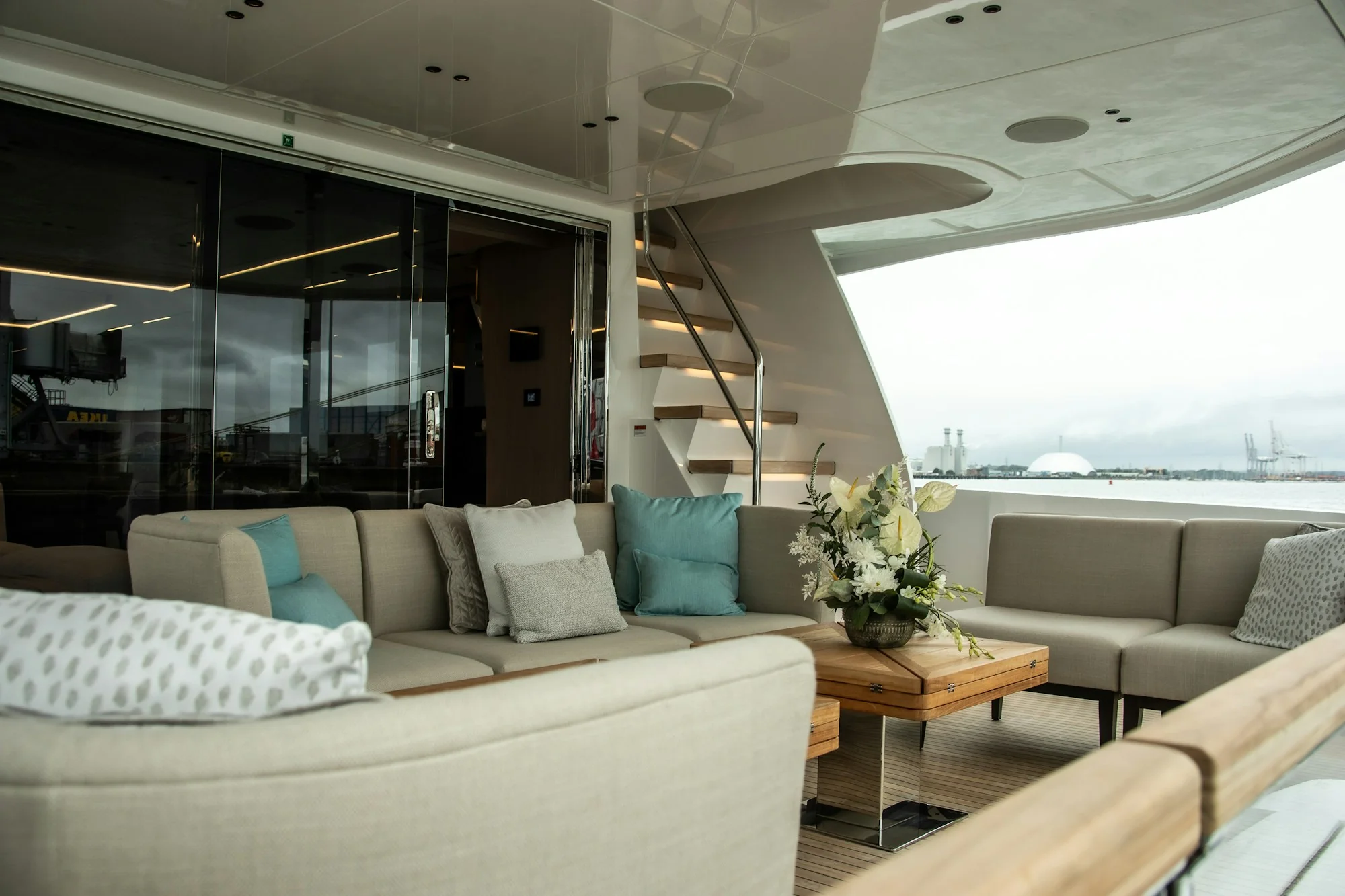
Use hospitality cleaning principles for cabins and guest areas while leaving decks, corrosion, mechanical systems, and marine detailing to specialists.
Begin every yacht turnaround with a handover from the captain, chief steward, owner, or appointed vessel manager. Confirm approved products, restricted compartments, shore-power conditions, access routes, waste procedures, and which systems must remain untouched. A residential cleaning checklist should never override the vessel's operating or safety protocols.
In guest cabins, work from high to low with tools reserved for the appropriate surfaces. Replace linens according to the onboard laundry plan, vacuum only where the equipment is approved, and test products before using them on lacquer, leather, veneers, specialty fabrics, or integrated electronics.

Reset bathrooms and the galley with marine-compatible products and strict separation of cloths and tools. Food storage, provisioning dates, potable-water systems, refrigeration, and appliance servicing remain the responsibility of the crew or a qualified marine professional rather than a general cleaning team.
Salt removal, exterior decks, teak, non-slip coatings, brightwork, and corrosion treatment require vessel-specific knowledge. Follow the manufacturer and crew instructions or use an insured marine detailer; household acids, abrasives, and metal polishes can permanently alter a finish.
Keep guest presentation restrained: neatly placed amenities, dry textiles, uncluttered passageways, and a final check for fingerprints on approved interior glass and hardware. Navigation materials, emergency equipment, controls, and the captain's briefing should be positioned only by authorized crew.
Post-Event Refresh and Recurring Cleaning offer useful principles for hospitality resets, but service aboard a yacht should proceed only when the provider is explicitly approved, insured, and equipped for the vessel and marina. Mechanical work, mold or water damage, fuel or sewage issues, corrosion, and exterior marine detailing require the relevant specialist.
Begin with command authority, marina rules, and a vessel handover
No shoreside cleaning routine should begin aboard a yacht without authorization from the captain, chief steward, owner, or appointed vessel manager. Confirm berth access, marina rules, identification, gangway procedure, work hours, crew presence, guest status, shore power, alarms, restricted compartments, emergency signals, and weather conditions. The authorized lead decides whether boarding and work can proceed. Record which decks and interior zones are released, where equipment may be staged, which doors and hatches must remain positioned, and how waste leaves the vessel.
A residential checklist never overrides standing orders, safety management, crew duties, or manufacturer guidance. If conditions change, stop and return the decision to command rather than improvising around a moving or technically active vessel. Place the approved access window and muster instruction on the daily brief, then confirm both verbally before the first person transfers supplies across the gangway.
Define insurance and scope before tools cross the gangway. Routine hospitality cleaning may address approved guest cabins, interior passageways, heads, salon surfaces, and limited galley presentation. Marine detailing, deck care, engine and technical spaces, bilges, fuel, sewage systems, potable water, navigation equipment, corrosion, mold or water damage, and hazardous material require the relevant qualified and insured specialist. Confirm whether products must appear on an approved vessel list and whether tools must be dedicated onboard.
Protect privacy around ownership, guests, routes, schedules, security systems, documents, and vessel location. Do not post or photograph the yacht without explicit permission. Premium service begins with discretion and a scope the crew can trust. Route questions through one authorized onboard contact during the visit, preventing separate requests from guests, vendors, or shoreside staff from changing a command-approved plan mid-service.
Build a finish register for cabins, salons, and passageways
Yacht interiors combine lacquer, veneer, solid wood, leather, metal, stone, glass, carpet, wall covering, acoustic material, specialty fabrics, and integrated electronics within compact spaces. Obtain the vessel’s care documentation and identify products, cloths, brushes, and vacuum attachments approved for each zone. Test any unfamiliar method in a concealed place and allow the finish to dry before continuing. Keep liquids away from seams, vents, controls, hardware openings, and unfinished edges.
Do not use a household multipurpose product simply because the surface resembles one ashore. Salt, humidity, vibration, and previous marine coatings can change how a finish responds. Report lifting veneer, clouded lacquer, corrosion, delamination, loose trim, water marks, and failed sealant instead of attempting restoration during turnaround. Assemble a labelled zone kit from the approved vessel inventory and return it to secure stowage after use, keeping residential products from entering the workflow through convenience.
Work through cabins and salons from high accessible areas downward, respecting crew instructions for blinds, hatches, climate, and doors. Clear only authorized items and use a documented tray or location for personal effects. Never open private drawers, luggage, safes, medicine storage, technical panels, or crew compartments as part of presentation. Manage cords and compact equipment carefully so passageways and exits remain clear.
Vacuum only where the device and surface permit, and avoid pressing against delicate edges or integrated floor fittings. Return furniture and movable objects to the vessel plan, accounting for secure stowage rather than land-based styling. A cabin should feel composed at the dock and remain ready for movement according to crew direction. Count trays, cloths, attachments, and temporary protectors at each zone closeout, reducing the chance that a loose service item remains behind a berth or inside salon furniture.
Reset linens, heads, and the galley within crew-defined boundaries
Handle cabin linens under the onboard laundry and inventory plan. Confirm berth size, set assignment, care labels, fragrance preference, and whether items are laundered onboard, ashore, or by a specialist. Keep used textiles separate from clean stores and dry every layer completely before making the berth. Steam only when the textile and vessel procedure permit it; do not claim that steaming sanitizes a fabric.
Inspect for damage, moisture, and persistent odor, then refer valuable, delicate, or affected pieces to the appropriate textile professional. Keep emergency equipment, controls, reading lights, ventilation, and access panels unobstructed. Guest amenities should be approved, stable, and stowed for the vessel’s next operating condition. Move clean and used linen in separate closed carriers sized for the passageway, coordinating transfers so bags never block stairs, watertight doors, crew routes, or emergency access.
Heads and the galley require separate tools and marine-compatible products. In heads, follow instructions for stone, glass, plated fixtures, cabinetry, seals, and the vessel’s sanitation system; do not pour household chemistry into drains or toilets by assumption. In the galley, clean approved food-contact and presentation surfaces while leaving provisioning, food dates, refrigeration, potable water, appliance servicing, and waste systems to authorized crew. Keep liquids away from controls and secure every item after use.
Report leaks, drainage changes, refrigeration concerns, unusual odor, damaged seals, or system alarms immediately. A visually polished galley or head does not demonstrate that the underlying marine system is serviced or safe. Color or text-code the two tool groups within the vessel’s approved system and reconcile them separately, preserving an unmistakable boundary even during a compressed guest turnaround.
Refer salt, decks, brightwork, and corrosion to marine specialists
Exterior salt removal is not an invitation to rinse every surface with a hose. Teak, painted decks, non-slip coatings, caulking, polished metal, glazing, canvas, composite surfaces, drains, and deck hardware each have vessel-specific methods and environmental constraints. The captain or marine detailer should define water use, runoff, product approval, sequence, and weather limits. General cleaners should not work over water, aloft, outside rails, on unstable gangways, or around active deck equipment without the required marine role, training, and controls.
Household acids, abrasives, pressure equipment, and metal polishes can permanently alter a finish or create unsafe residue. Refer exterior detailing to an insured professional approved for the vessel and marina. Confirm a weather and vessel-movement decision before every exterior handoff, because a method approved in principle may become inappropriate when wind, rain, wake, heat, or berth activity changes.
Corrosion, green staining, blistering paint, failed caulk, water intrusion, and persistent salt deposits are conditions to document, not scrub harder. Hardware may connect to electrical bonding, navigation, rigging, safety, or structural systems that a cleaner should not disturb. Do not remove covers, open deck lockers, operate winches, move lines, adjust fenders, or reposition emergency gear for a photograph. Even accessible glass and metal should be handled only under the approved method, with tools controlled against wind and movement.
If runoff, damaged coating, or unknown residue appears, pause and consult the vessel lead. A marine specialist can distinguish cosmetic soil from maintenance that affects the asset beyond presentation. Provide the specialist with an exact zone, nearby material, and stable reference view when photography is permitted, avoiding close-ups that conceal scale or identifiable location details the crew has restricted.
Plan guest and charter turnaround as a coordinated operation
A turnaround begins before guests depart. The captain and interior lead should establish when cleaners may enter, which service teams overlap, where luggage and provisions move, and what must be documented. Coordinate laundry, catering, florals, maintenance, waste, and guest amenities so clean rooms are not repeatedly crossed by carts and boxes. Keep passageways clear and protect privacy when personal belongings remain onboard. Do not discard unlabelled food, medication, documents, gifts, or crew items without authorization.
Broken glass, spills near technical equipment, biological waste, and unknown liquids require the vessel procedure and appropriate specialist. A calm sequence prevents the hurry of a charter change from blurring safety and scope. Use the crew’s turnaround board or approved schedule as the single timing reference, marking zone release and completion without adding guest identities, destinations, or private itinerary details. Create a designated pause location for unresolved belongings, allowing the authorized crew member to decide their destination without leaving them in a finished cabin or busy passageway.
Presentation should be restrained and secure. Place approved amenities, align dry textiles, clear usable surfaces, and inspect fingerprints on permitted interior glass and hardware. Do not position candles, loose flowers, unsecured trays, glassware, navigation materials, or decorative objects simply because they suit a hotel image. The crew determines stowage and the condition required for departure. Fragrance remains optional and must follow vessel and guest preferences without entering HVAC or masking odor.
Fuel, sewage, electrical, musty, or mechanical smells require immediate crew attention. A yacht can feel gracious without turning the cabin into a land-based suite that ignores movement, compact circulation, and technical authority. Ask the interior lead to perform the final movement-ready check, confirming that the elegant dockside arrangement also meets the vessel’s stowage, clearance, and operating requirements. Complete that check after vendors leave, since one late floral box, provision bag, or maintenance tool can undo both the presentation and the vessel-safe circulation plan.
Close the visit with an accountable marine handover
Complete the walkthrough with the authorized crew member. List zones and accessible surfaces addressed, products used where the vessel requires records, items moved under instruction, maintenance conditions observed, and work referred to specialists. Confirm that tools, cloths, waste, and temporary protection have left through the designated route. Return doors, blinds, lights, furnishings, and climate settings only as directed. Do not sign off navigation, water, sanitation, electrical, fire, security, or mechanical systems based on visual inspection.
Photographs should follow the vessel’s confidentiality policy and avoid guests, crew records, charts, identifiers, access controls, and location data. The handover must help the crew prepare the yacht, not create marketing proof for a cleaning provider. Obtain crew acknowledgement for open maintenance notes and restricted zones, ensuring the service closeout cannot be mistaken for technical acceptance or authorization to sail. Deliver product and condition notes in the vessel’s established format, giving crew an actionable record without duplicating restricted logs, maintenance systems, or guest-facing documents.
Post-Event Refresh and Recurring Cleaning offer useful principles for interior hospitality resets, but service aboard a yacht should occur only when the provider is expressly approved, insured, trained, and equipped for that vessel and marina. These services do not imply exterior detailing, corrosion treatment, technical cleaning, mold or water-damage remediation, fuel or sewage response, waste transport, or crew duties. When conditions exceed routine approved surfaces, use a marine detailer, engineer, electrician, plumber, textile specialist, restoration firm, or other relevant professional under command authority. Skye’s luxury standard is compatible with yacht care only when precision includes the confidence to stop.
Respect for command, materials, privacy, and specialist boundaries is what allows an interior reset to support the next voyage responsibly. Review the vessel-specific scope whenever berth, command, operating pattern, finish register, or marina policy changes, carrying forward only instructions the current authorized lead has confirmed. Archive superseded instructions according to vessel policy so an old berth rule, guest preference, product approval, or crew contact cannot be mistaken for the current command direction.
Make the insight part of your routine.
The best property standards are easy to repeat. Capture the detail, stage what is needed, and give your concierge team the context to refine it.
Begin with command authority, marina rules, and a vessel handover
No shoreside cleaning routine should begin aboard a yacht without authorization from the captain, chief steward, owner, or appointed vessel manager.
Build a finish register for cabins, salons, and passageways
Yacht interiors combine lacquer, veneer, solid wood, leather, metal, stone, glass, carpet, wall covering, acoustic material, specialty fabrics, and integrated electronics within compact spaces.
Reset linens, heads, and the galley within crew-defined boundaries
Handle cabin linens under the onboard laundry and inventory plan.
Continue the subject
More Guides and Services for Events and private hospitality
Follow the same care intent into adjacent rooms, materials, and decisions without losing the boundaries that protect the property.
Check Bay Area service availabilityLeave the execution to Skye.
Tailored scopes, vetted specialists, and follow-through designed around your property.
Post-Event Cleaning Across San Francisco and the North Bay
A focused reset for gathering spaces, kitchens, restrooms, surfaces, spills, waste, and floors after private entertaining or a hosted event.

Recurring House Cleaning in San Francisco and the North Bay
A considered weekly or biweekly routine that keeps your home beautifully maintained without interrupting the way you live.
Worth returning to?
Save this field note or share it with the person who helps care for your space.
Experience the Skye standard in your own space.
We will map your property, align finish-safe products, and select the right specialists so impeccable becomes the baseline, not another task on your list.
Your next step
Tell us what needs to feel different. We will design the path to get it there.
