
Move-out handoff scope
Boxes, packing debris, and floor soil are removed from the same vacant residence so the difference reflects a real turnover sequence, not two unrelated interiors.
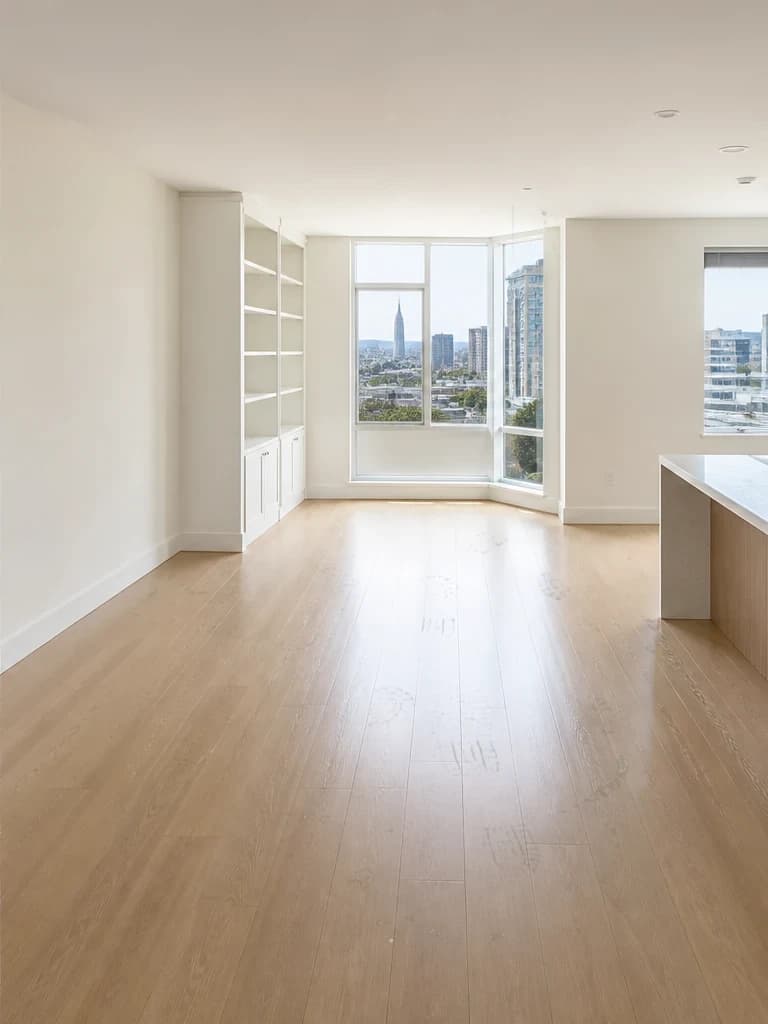

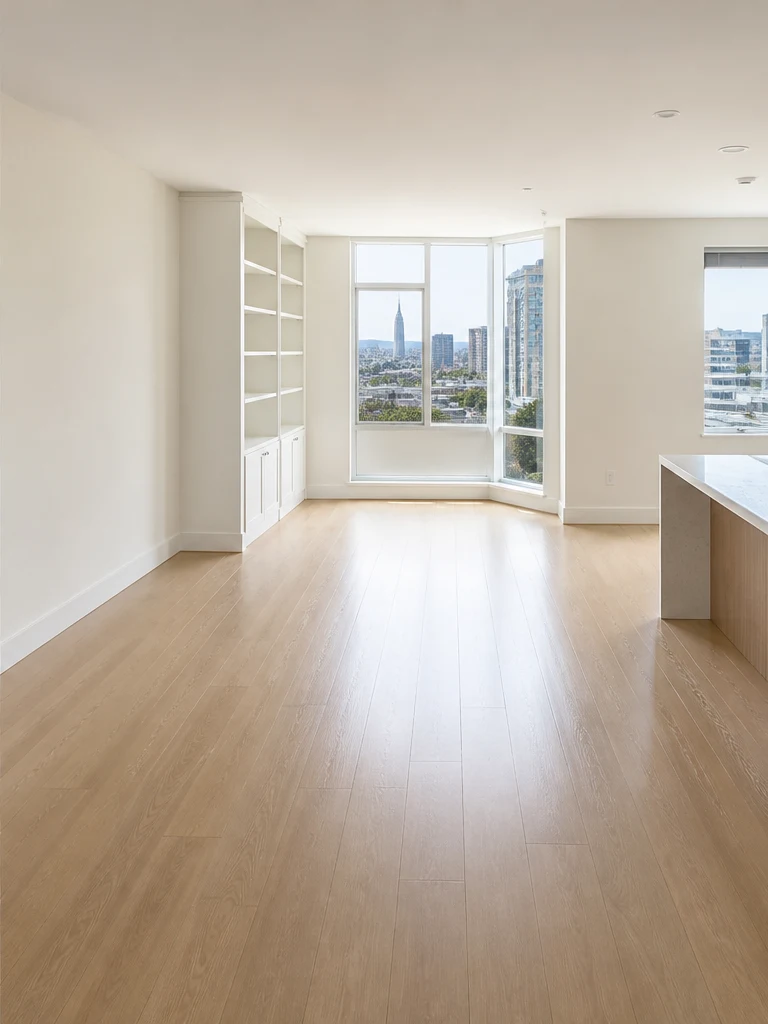
Moving creates a different cleaning challenge: cabinets are open, appliance interiors are visible, baseboards are exposed, and every remaining mark is easier to notice. This service is organized for an empty or nearly empty property so the team can work efficiently from room to room.
Local coverage: Skye considers move-transition requests across San Francisco, Marin, and select North Bay communities. Share the full address and handoff date so route and service time can be confirmed.
Plan the serviceFor move-outs, we focus on presenting the home in clean, cared-for condition for the next walkthrough. For move-ins, we prepare the accessible surfaces you will touch first, including kitchens, bathrooms, closets, and floors.
The property should be free of boxes, loose belongings, and contractor work before cleaning starts. Water and power must remain available, and any building access or elevator reservation should be confirmed in advance.
These are illustrative scope studies, not client records. Each comparison keeps one recognizable environment so the visible difference comes from cleaning and reset work, not a different property, renovation, or camera story.
Boxes, packing debris, and floor soil are removed from the same vacant residence so the difference reflects a real turnover sequence, not two unrelated interiors.
A property-specific sequence keeps access, finish notes, priorities, and the final review aligned from the estimate through the handoff.
We confirm the property, current condition, priority rooms, materials, access, timing, and the result you need.
Included work, exclusions, product preferences, arrival details, and route availability are clarified before service.
The team follows the agreed priorities, reviews visible details, and carries useful feedback into the next step or visit.
We confirm whether the property is fully empty, which appliances remain, and whether cabinet, drawer, closet, oven, or refrigerator interiors are included. This prevents important details from being assumed or missed on moving day.
Bagged household trash can be consolidated within the agreed scope, but junk removal, donation hauling, leftover furniture, and construction debris require a separate provider.
Kitchen and bathroom surfaces, accessible shelving, closet interiors, doors, baseboards, fixtures, and floors are cleaned after belongings are removed. Appliance interiors are included only when listed in the approved scope.
Cleaning can improve ordinary soil and residue, but it does not repair paint, patch walls, remove permanent stains, or guarantee the return of a security deposit.

High-rise access, loading zones, elevator windows, parking, keys, and concierge instructions should be shared before the visit. We schedule around the confirmed cleaning window and coordinate our own arrival within those rules.
If movers or contractors are still working, the result may be compromised. For the best handoff, schedule cleaning after the property is empty and all repair work is complete.
Use these details to understand fit, prepare the property, protect its finishes, and compare the proposed scope with the result you actually need.
Service chapter
Move-out and move-in cleaning share an empty-home advantage, but they serve different decisions. A move-out plan prepares accessible surfaces for an owner, buyer, property manager, or final walkthrough after belongings leave. A move-in plan prepares the surfaces a new resident will open, touch, and use first, often before deliveries arrive. We confirm which direction applies, who owns the decision, when keys transfer, and whether the property will be fully empty or only nearly empty. The scope names rooms, storage interiors, appliances, floors, and add-ons instead of relying on the phrase full clean. It also distinguishes cleaning from packing, repairs, hauling, painting, inspection, and property management. Define empty in writing: no loose property on included surfaces, no packed floor zones, and no mover equipment remaining after the stated release time.
Condition and timing shape the estimate. Cabinets exposed after years of storage, an occupied refrigerator, pet residue, adhesive from ordinary household use, and a lightly maintained guest suite create different work from a routinely serviced empty apartment. Share known finish restrictions, appliance models, maintenance issues, and any products applied before the move. Photographs can support quoting with permission, but sensitive documents, mail, access devices, and personal belongings should be excluded from the frame. Cleaning can improve ordinary soil on compatible surfaces; it cannot guarantee a security deposit, pass an inspection, remove every stain, or reverse wear, paint damage, etching, scratches, corrosion, and aging. Keep lease documents, inspection forms, repair receipts, and deposit discussions outside the cleaning checklist so service completion is not confused with a legal or financial determination.
Service chapter
City moves depend on logistics that must be settled before arrival. Confirm the unit number, authorized contact, key or lockbox procedure, concierge registration, loading or parking rules, elevator reservation, quiet hours, and equipment route. The cleaning team should not borrow a mover’s credential, follow another resident through a secured door, or leave keys in an improvised location. Common corridors, stairs, fire routes, neighboring entrances, and elevator landings remain clear. In a private home, gate, alarm, parking, and door instructions receive the same discipline. One current access note is safer than several conflicting messages passed among resident, broker, mover, contractor, and building staff. Record who receives keys at closeout and what happens if that person is late, avoiding an unsecured unit, informal concierge handoff, or unauthorized key photograph.
Water, safe electrical service, working interior lighting, and suitable ventilation should remain available until the clean is finished. The property also needs a defined period without movers, installers, painters, repair technicians, or delivery crews crossing completed rooms. If another trade remains active, we identify which zones are formally released and which will need a later pass. Heat, broken plumbing, exposed wiring, unstable fixtures, blocked exits, or a lack of basic utilities can make work impractical or unsafe. A missed elevator window may also reduce access time without changing the volume of work. The authorized contact should be reachable to approve a revised priority or reschedule; the team should not compress safe methods to preserve an impossible handoff. Confirm the utility cutoff date against the cleaning window in advance; a verbal assumption about water or power can leave an emptied property unusable on handoff day.
Service chapter
Storage interiors reveal what ordinary occupied cleaning cannot reach. Cabinets, drawers, shelves, and closets included in the quote must be emptied before service, with loose liners removed or identified for retention. We vacuum or remove dry debris first, then use a compatible low-moisture method that respects unfinished wood, veneer edges, paint, hardware, shelf coatings, and seams. Surfaces must dry before doors or drawers close and before possessions return. Adhesive shelf paper, labels, liners, and unknown residue are not automatically scraped away; removal can lift paint or finish and needs approval after testing. Large built-ins, unstable shelving, locked storage, safes, and areas containing belongings remain outside accessible interior care. Place approved loose hardware, shelf supports, manuals, and fixture parts in one labeled owner location instead of discarding them or redistributing them across newly cleaned cabinets.
Kitchen and bathroom work is confirmed item by item. Counters, backsplash, sink, fixtures, cabinet faces, appliance exteriors, vanity, mirrors, toilets, tub or shower, compatible tile, and floors receive finish-aware cleaning. Oven, refrigerator, drawer, and cabinet interiors are included only when listed, emptied as required, powered or cooled according to manufacturer guidance, and safe to access. We do not disconnect appliances, utilities, ice lines, gas, internal machinery, or built-in systems. Natural stone, coated glass, plated metal, specialty grout, lacquer, and newly refinished surfaces may restrict products. Leaks, damaged seals, loose fixtures, nonfunctioning appliances, or recurring odor are reported for maintenance instead of being masked for the handoff. Keep appliance model guidance available for included interiors, particularly where removable components, coatings, filters, locks, or cooling requirements limit ordinary access.
Service chapter
Once belongings are removed, the route can address doors, frames, baseboards, reachable ledges, vent exteriors, mirrors, accessible interior glass, closet floors, and broad floor edges that were previously hidden. Work generally proceeds from higher dry dust removal toward lower damp finishing, with tools inspected for grit before they touch fine wood, stone, resilient flooring, or new coatings. Wall spot care depends on paint guidance and a concealed test; widespread wall washing, nail removal, patching, and paint touchup belong to another trade. Window exteriors, high glass, chandeliers, ceiling work, and complex fixtures require safe access and may need a specialist rather than a move-day extension. Note wall marks by room and approximate location before testing, separating removable compatible soil from holes, adhesive damage, paint transfer, wear, and required decorator work.
Floors are assessed by material, condition, and remaining obstacles. Dry soil is removed before an approved damp method, using controlled liquid around transitions, base details, thresholds, and unfinished edges. Carpet extraction, rug care, sanding, polishing, waxing, stone restoration, grout recoloring, and repair are separate services unless explicitly arranged with the correct provider. Permanent furniture impressions, sun fading, scratches, coating failure, and discoloration may become more visible in an empty room even after soil is gone. We do not drag abandoned furniture or appliances to uncover flooring. Heavy-item movement, disassembly, donation, and disposal require suitable labor and authorization so the final clean does not damage the property on its last day. Observe maker traffic and cure limits on newly refinished floors, and postpone cleaning where the approved method or normal foot access would compromise that finish.
Service chapter
The clean should begin after packing is complete and the agreed rooms are free of boxes, supplies, food, and loose property. Bagged ordinary household waste may be consolidated only as quoted and within building rules. Furniture, mattresses, electronics, paint, chemicals, donation items, large volumes of trash, and abandoned belongings need the appropriate hauler or responsible owner. Cleaning staff should not decide that an unlabeled box, unopened product, mail, spare key, or fixture part is unwanted. Questionable items go to a designated hold area and contact. If movers return after the clean, protect the route and plan a limited touchup rather than pretending their equipment, footwear, and packing residue will not affect the result. Set a deadline for the owner or representative to review the questionable-item hold, ensuring it does not remain inside the property when keys change hands.
Pest activity, needles, bodily fluids, animal-waste saturation, sewage, mold-like growth, fire residue, significant water damage, and suspected lead, asbestos, or other hazardous material are not ordinary turnover soil. The affected zone requires the property’s response plan and a qualified provider before routine cleaning resumes. Construction debris, uncontrolled dust, loose fasteners, exposed wiring, broken glass, unstable built-ins, and active repair work also need correction or a construction-specific scope. We describe the visible condition without diagnosing beyond our role and contact the authorized person. A deadline, lease ending, or scheduled delivery does not make an unsafe method appropriate. The handoff may need to move so the next resident receives a property that is responsibly released. Request confirmation that remediation or repair released the exact affected zone, rather than assuming that work elsewhere in the unit cleared every related surface.
Service chapter
Final review follows the approved empty-home checklist. We inspect the included storage and appliance interiors, kitchen and bathroom surfaces, doors and base details, accessible glass, and floors after they are dry. Lights, windows, locks, thermostats, appliances, and alarms are operated only within the authorized cleaning procedure; technical testing belongs to the responsible owner, inspector, or contractor. Tools, waste, signs, and floor protection are removed, and keys or access devices return through the documented channel. Inaccessible areas, remaining property, stains, damage, and maintenance concerns are recorded factually. Condition photographs require permission and should exclude access codes, mail, documents, addresses beyond operational need, and anything unrelated to the service issue. Offer the final checklist only to the authorized parties and record their role, preserving privacy when owners, tenants, brokers, building staff, and movers share the schedule.
For move-in, allow enough time after cleaning for surfaces to dry and for any maintenance issue to be addressed before boxes, children, or pets enter. For move-out, the client or representative should review the agreed scope while access remains available; the cleaning company cannot negotiate lease standards or guarantee a deposit decision made by another party. Brokers and property managers receive only the service information the client has authorized. If later trades, staging, or movers disturb the result, a defined touchup can be quoted. A successful turnover closes one household’s use respectfully and gives the next resident a clean, understandable starting point without disguising defects or overstating what cleaning can prove. Leave a concise note for the next occupancy naming drying restrictions and open maintenance only when the client authorizes that handoff; private history should not transfer by default.
Scope clarity
What Move In / Move Out Includes and Where the Scope Stops
The confirmed estimate defines the final scope. These boundaries help separate routine cleaning from restoration, repair, hazardous work, and specialist access.
Confirmed scope
Service boundaries
Skye field guides
Use these material-aware guides to prepare the property, recognize scope boundaries, and ask better questions before service day.
Compare the closest service paths, then confirm whether your exact Bay Area address fits the current route.
A detail-focused reset for homes with buildup, overlooked edges, or rooms that need more attention than routine maintenance provides.
Learn more 02A staged cleaning process for finished renovations, new cabinetry, fixtures, glass, and surfaces affected by fine construction dust.
Learn more 03Plan keys, elevators, loading, vendor sequencing, and the property handoff before moving day.
Learn more 04Coordinate the address, handoff condition, access, and route from Skye’s Marin base.
Learn more 05Review the San Francisco, Marin, and North Bay communities we consider, then confirm availability for your exact address.
Learn moreDecision guide
Compare fit, boundaries, access, and preparation before confirming the property-specific scope.
Move-out cleaning supports the next walkthrough, while move-in cleaning prepares accessible surfaces before belongings arrive.
The service is organized for an empty or nearly empty home, with boxes, loose belongings, and active contractor work cleared first.
Schedule cleaning after belongings are removed and repair or contractor work is complete so the finished result is not compromised.
Cabinet, drawer, shelf, closet, oven, and refrigerator interiors are included only when listed in the approved scope.
Packing, unpacking, furniture removal, donation hauling, and junk removal are outside the cleaning scope.
Cleaning does not include wall repair, paint correction, property restoration, or a guarantee of any inspection or deposit outcome.
They require a separate assessment and quote rather than being assumed in the turnover checklist.
Water and power must remain on, and keys, parking, concierge instructions, and elevator reservations should be confirmed in advance.
Share the building rules, loading access, elevator window, parking route, key handoff, and confirmed cleaning deadline.
The final review covers the approved cleaning areas and identifies conditions outside the agreed scope.
Time-sensitive care
A clear next step, shaped for this service.
Plan a cleaner handoff between homes
Tell us whether you are moving in or out, when the property will be empty, and which interiors or appliances should be included.
