

Coordinate contractors, cleaners, building access, movers, and a final touch-up so a new home feels considered from the first night.
A successful move-in clean is mostly about sequence. Complete repairs, painting, installation, pest work, and contractor punch-list activity first; remove tools and heavy debris; then schedule cleaning while the home is empty. If renovation dust remains, confirm whether the property needs Post-Construction Cleaning rather than a standard move-in scope.
Keep water and power available, confirm keys and alarm instructions, and reserve required parking or elevator windows. Share finish notes for stone, wood, metal, glass, cabinetry, and new appliances before the visit. The building and service teams should know exactly when the empty property becomes available and when movers will arrive.
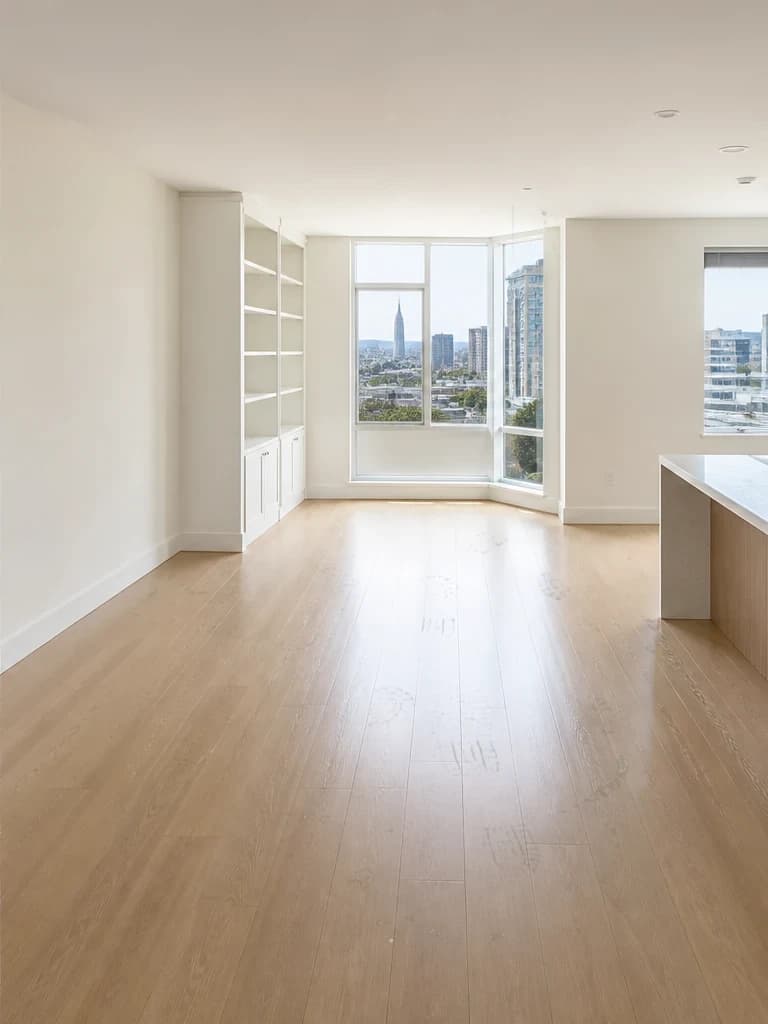
Define cabinet, drawer, closet, oven, and refrigerator interiors in the quote instead of assuming they are included. Kitchens, bathrooms, doors, baseboards, reachable ledges, and floors can then be reviewed in a logical room-by-room order. Maintenance defects, paint damage, permanent stains, and incomplete construction should be documented separately from cleaning.
Allow newly installed, refinished, painted, sealed, or coated surfaces to cure for the period specified by the contractor or manufacturer. Do not add polish, sealer, floor treatment, or adhesive protection without written approval. Movers should use the protection method approved for the floor and remove it without leaving tape or residue behind.
Avoid running a full cleaning crew through the same rooms as active movers. Separate the schedules to reduce congestion, trips, damaged finishes, and re-soiling. After delivery, a focused touch-up can address approved entry paths, empty surfaces, ordinary packaging dust, and the kitchen or bathroom needed for the first night.
Keep a private checklist of completed rooms and unresolved property issues, sharing photos only with authorized recipients. Move In / Move Out Cleaning is the primary empty-home service, while One-Time Deep Clean may suit an occupied property that needs more detail after unpacking. The right choice depends on condition, access, and how much remains in the space.
Build the move around a clean handoff milestone
The best move-in cleaning window sits after construction, repairs, painting, installation, pest work, and seller or landlord obligations are complete, but before movers deliver belongings. Put that milestone on the shared schedule and name who can release the property to cleaning. A contractor saying almost finished is not the same as an empty, safe, utility-ready home. Confirm that tools, protective materials, heavy debris, and active work have left the rooms.
If fine renovation dust remains, classify the visit as Post-Construction Cleaning with the appropriate scope rather than expecting a standard move clean to absorb jobsite conditions. The sequence protects new finishes and prevents trades from immediately re-soiling completed rooms. Require a simple release from the responsible party that names completed areas, remaining exclusions, utility status, and the moment responsibility transfers, giving the cleaning lead an actionable starting point.
Work backward from the moving arrival and include realistic buffers. The cleaning team needs access, time for approved interiors, floor drying, a final review, and removal of its equipment before movers enter. Building elevator windows, loading reservations, key transfer, parking, alarm setup, and utility activation can create dependencies that belong on the same timeline.
Assign one property contact who can make scope decisions without pulling cleaners into disputes among owner, broker, contractor, mover, and building management. When a delay compresses the plan, reduce or reschedule the scope explicitly rather than promising that every detail can still be completed safely before the truck doors open. Predefine the decision order for delays, protect safety, preserve finish restrictions, keep critical first-night rooms, then defer lower-priority detail, so changes remain calm, transparent, and useful to the arriving household.
Confirm that the empty property is genuinely ready
Walk the home before the service date or request current, authorized photographs of every included area. Verify that water, power, lighting, ventilation, and approved appliances are available; that rooms are empty or nearly empty; and that cleaners can reach the specified surfaces without moving contractor stock or personal property. Identify locked rooms, utility closets, balconies, storage cages, garages, and building common areas that may look connected but sit outside the in-unit scope.
Confirm where ordinary bagged waste may go and whether the building limits disposal. Junk hauling, donation removal, abandoned furniture, paint cans, chemicals, and construction debris should be assigned to the correct provider before cleaning. Date remote images and reconfirm conditions on arrival, since a final trade visit, delivery, leak, open window, or unauthorized storage can change readiness after the virtual review.
Use the readiness check to separate soil from property condition. Photograph or list chips, scratches, wall damage, failed caulk, loose hardware, broken fixtures, pest evidence, moisture, appliance errors, permanent staining, and unfinished trade work with owner permission. Cleaning may reveal these issues more clearly, but it does not create responsibility for repairing them or guaranteeing an inspection result.
If the home contains unknown powder, sharps, bodily fluid, heavy mold-like growth, animal waste saturation, or hazardous material, stop and request qualified assessment. A premium handoff begins with an honest baseline, not a checklist that quietly converts every unresolved condition into a cleaner’s obligation. Store any authorized condition record through the owner’s approved private channel, limiting photographs to relevant surfaces and excluding documents, access devices, valuables, neighboring homes, and personal information.
Create a finish register for newly installed materials
New does not mean ready for ordinary chemistry. Gather installer and manufacturer care guidance for stone, wood floors, coatings, cabinetry, metal, glass, tile, grout, paint, wallcovering, appliances, and specialty fixtures. Record curing dates and any period during which moisture, tape, rugs, furniture, or cleaning products are restricted. If instructions conflict, ask the responsible contractor or manufacturer to resolve them in writing before the visit.
A cleaner should not test whether a floor coating has cured or assume a builder’s protective film may be removed. Adhesive, grout haze, paint, silicone, labels, and construction residue can require trade-specific methods beyond routine move-in cleaning. Ask the construction or design team to deliver the care packet before scheduling, leaving time to identify missing products, specialist-only residue, ventilation needs, and surfaces still under cure restrictions.
Translate the register into room notes with approved products and no-touch zones. Newly refinished floors may need a different entry route; unlacquered metal may be intentionally patinated; natural stone may have a fresh sealer; custom millwork may react to moisture along its edges. Keep cleaning liquid controlled, use clean attachments, and test only where the finish guidance permits. Report haze, lifting, cracks, discoloration, coating variation, or damage instead of trying to blend it.
Stone restoration, floor refinishing, paint correction, caulk, installation defects, and warranty work remain with the relevant fabricator or trade. The goal is to preserve the handoff condition, not cosmetically complete the construction project. Place temporary route and no-touch cues where needed without adhesive on new finishes, then remove and account for them before the property transfers to movers or residents.
Define kitchens, bathrooms, storage, and appliances line by line
Empty-home cleaning exposes interiors that routine service may not include. State whether cabinet shelves, drawers, closets, pantry surfaces, oven, refrigerator, wine unit, laundry appliances, and other built-ins are included, excluded, or awaiting installation. Confirm that previous contents have been removed and that the owner authorizes access. Appliance interiors require model-specific preparation, safe food handling, cooling or shutdown, and complete drying before settings are restored by the responsible person.
Do not discard manuals, filters, accessories, spare parts, keys, remotes, paint samples, or warranty documents because they appear to be packing leftovers. Establish a labelled keep area before the first cloth enters the room. Inventory removable shelves, trays, racks, bins, inserts, and hardware before approved cleaning, returning dry components to their documented locations without forcing, adjusting, or substituting a part.
In kitchens and bathrooms, sequence compatible high surfaces, storage interiors, counters, fixtures, appliance exteriors, and floors while keeping tools separated. Identify natural stone, plated hardware, specialty glass, coatings, and new grout before choosing a method. Inside cabinets, look for dust and ordinary installation residue without scraping adhesive or correcting rough construction. Report leaks, drainage concerns, loose fittings, damaged seals, or an appliance alert to the property contact.
Closets and drawers should be fully dry before boxes or clothing arrive. A defined line-by-line scope is more useful than whole home deep clean language because the resident can see exactly which empty areas were prepared for first use. Leave approved doors and drawers positioned for the final dryness check, then have the responsible contact accept them before movers fill the storage and conceal the prepared surfaces.
Keep movers and cleaners out of each other’s path
Avoid scheduling the full cleaning crew and movers in the same rooms. Carts, boxes, dollies, wet floors, open cabinets, cords, and people carrying large objects create congestion and make it difficult to assign new marks or protect finished work. Release the home to movers only after cleaners have removed equipment and approved floors are dry. The mover should supply and install floor, wall, elevator, and doorway protection compatible with the finishes and building rules.
Cleaners should not tape unknown protection to a new surface or apply polish in an attempt to prevent scratches. Protective strategy belongs with the owner, mover, contractor, and manufacturer guidance. Use room-by-room release markers controlled by the move coordinator, making clear which zones are wet, under review, accepted, or open to delivery without turning cleaners into traffic marshals.
If the schedule requires a later touch-up, define it as a separate visit after delivery crews leave. Focus on approved entry paths, ordinary tracked soil, empty counters, accessible fixtures, and the kitchen or bathroom needed for the first night. Box unpacking, furniture assembly, organizing, artwork placement, packaging haul-away, and moving heavy items are distinct services unless expressly contracted with qualified providers.
Keep one clean zone closed to traffic when practical, but do not promise it will remain untouched by others. A named handoff between mover and cleaner helps the household understand which team owns each stage and prevents repeated work from becoming an unplanned all-day standby. Price and schedule the return around observable post-move conditions, preserving time for compatible soil removal while excluding damage, blocked rooms, packing waste, and tasks belonging to movers or organizers.
Close with a private, useful first-night record
Complete the final review against the approved rooms and inclusions, not a general idea of perfection. Note cabinet or appliance interiors completed, areas that remained locked or occupied, finish restrictions, visible property concerns, and tasks referred to another trade. Condition photographs can support the owner’s personal record only with permission and secure handling; they should not capture access codes, documents, neighboring homes, valuables, or people. Cleaning documentation is not an insurance, legal, landlord, or inspection certification.
The owner, broker, or property manager decides how to use it and whether a separate professional report is required. Agree on who receives, retains, and deletes the service record, ensuring useful evidence reaches the client without becoming a permanent informal archive of an empty private residence. Obtain a named acceptance or exception at handoff, then direct repair, warranty, inspection, moving, and building questions to their responsible parties instead of leaving the resident with one undifferentiated completion note.
Prepare the first night through organization rather than luxury theatre. Keep designated linens, towels, toiletries, chargers, medications, pet needs, and basic kitchen items accessible under the household’s control, while the cleaner leaves approved storage dry and ready. Move In / Move Out Cleaning is designed for the empty-property phase; One-Time Deep Clean may fit a later occupied reset once unpacking reveals additional buildup. Post-Construction Cleaning belongs earlier when completed renovation dust is the central condition. None replaces repairs, hauling, organizing, moving, installation, pest work, or restoration.
The composed arrival comes from a disciplined sequence in which each professional finishes before the next begins. Let the household or concierge stage personal essentials after cleaning acceptance, preserving privacy and preventing medications, keys, documents, electronics, or valuables from being folded into the cleaning scope by implication. Schedule any occupied follow-up after the household has identified genuine cleaning needs, avoiding an automatic return that competes with unpacking or converts new damage and organizational choices into presumed move-clean obligations. Capture that later scope separately before the team returns.
Make the insight part of your routine.
The best property standards are easy to repeat. Capture the detail, stage what is needed, and give your concierge team the context to refine it.
Build the move around a clean handoff milestone
The best move-in cleaning window sits after construction, repairs, painting, installation, pest work, and seller or landlord obligations are complete, but before movers deliver belongings.
Confirm that the empty property is genuinely ready
Walk the home before the service date or request current, authorized photographs of every included area.
Create a finish register for newly installed materials
New does not mean ready for ordinary chemistry.
Continue the subject
More Guides and Services for Property transitions and project handoffs
Follow the same care intent into adjacent rooms, materials, and decisions without losing the boundaries that protect the property.
Check Bay Area service availabilityLeave the execution to Skye.
Tailored scopes, vetted specialists, and follow-through designed around your property.

Move-In and Move-Out Cleaning Across San Francisco and the North Bay
Detailed cleaning for empty or nearly empty homes before keys change hands, belongings arrive, or a final walkthrough begins.

Deep Cleaning in San Francisco and the North Bay
A detail-focused reset for homes with buildup, overlooked edges, or rooms that need more attention than routine maintenance provides.
Worth returning to?
Save this field note or share it with the person who helps care for your space.
Experience the Skye standard in your own space.
We will map your property, align finish-safe products, and select the right specialists so impeccable becomes the baseline, not another task on your list.
Your next step
Tell us what needs to feel different. We will design the path to get it there.
