
01
Define the carpet & upholstery scope
We confirm the property, current condition, priority rooms, materials, access, timing, and the result you need.
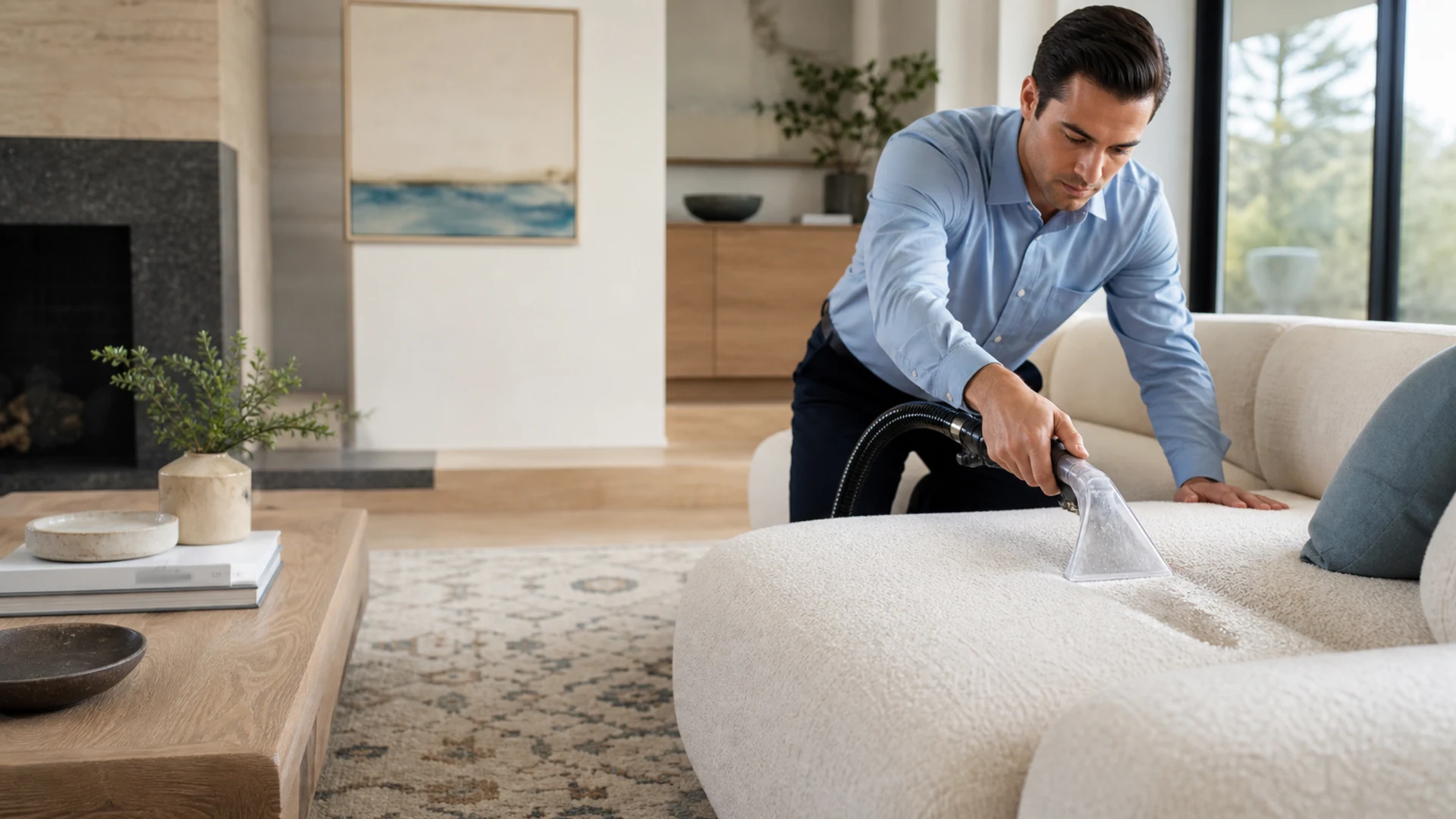
Carpet and upholstery cleaning should begin with the material, not a one-method-fits-all promise. We review care labels, visible wear, previous treatments, fiber type, stains, and access before recommending a suitable process.
Request an assessmentDepending on the item, the service may include dry soil removal, spot testing, targeted treatment, low-moisture cleaning, or extraction. Drying time and ventilation needs are explained before work begins.
Some delicate, antique, handmade, silk, leather, or color-unstable pieces require a textile specialist. Permanent stains, dye loss, wear, odor sources below the surface, and prior damage cannot be guaranteed away by cleaning.

A property-specific sequence keeps access, finish notes, priorities, and the final review aligned from the estimate through the handoff.
We confirm the property, current condition, priority rooms, materials, access, timing, and the result you need.
Included work, exclusions, product preferences, arrival details, and route availability are clarified before service.
The team follows the agreed priorities, reviews visible details, and carries useful feedback into the next step or visit.
The technician reviews the care code, construction, seams, backing, colorfastness, and visible condition before treating the piece. A discreet test area may be used when appropriate.
Cushions and accessible upholstery surfaces are vacuumed and cleaned according to the confirmed method. Decorative trims, unstable dyes, delicate fillings, and specialty fabrics may be excluded after inspection.
Spills should be reported with as much information as possible, including what caused the mark and any products already applied. That history helps reduce the risk of setting or spreading a stain.
Spot treatment is best effort. Heat, age, prior chemistry, fiber damage, and dye loss can make a mark permanent even when the surrounding textile becomes cleaner.

After cleaning, we explain expected drying conditions and when the item can return to normal use. Good airflow, controlled humidity, and limited traffic help protect the result.
Heavy furniture moving, carpet repair, re-stretching, dye correction, leather conditioning, and flood or biohazard cleanup are not included unless a separate qualified service is arranged.
Use these details to understand fit, prepare the property, protect its finishes, and compare the proposed scope with the result you actually need.
Service chapter
A responsible textile visit begins before equipment enters the room. We review the item’s maker, care label, purchase or installation records, fiber information, construction, backing, cushion material, dyes, trims, and previous professional or household treatments when those details are available. Wall-to-wall carpet, hand-tufted rugs, woven upholstery, velvet, performance textiles, and blended fabrics can look equally refined while responding differently to moisture, agitation, heat, alkalinity, solvents, and vacuum force. Appearance alone cannot confirm a fiber, and an uncertain material is never identified through a destructive burn test in the home. When care information is incomplete, the proposal remains conservative, testing is limited to an authorized discreet location, and a textile specialist may be the right next step before broader cleaning is approved.
Condition is documented separately from removable soil. We note traffic wear, pile distortion, abrasion, pilling, fading, sun change, seam stress, loose fringe, weakened backing, delamination, dye transfer, prior rings, odor, and areas affected by pets, moisture, or furniture. Photographs can support that record only with client permission and should exclude people, documents, security details, and unrelated belongings. A dark line may be filtration soil, a spill, permanent color change, or wear; a flattened seat may reflect construction and use rather than dirt. Cleaning can improve compatible soil, but it cannot recreate missing fiber, reverse dye loss, rebuild foam, tighten a frame, or guarantee an even appearance across material already changed by age or exposure. Naming that baseline protects both the textile and the client’s expectations.
Service chapter
A discreet test helps answer a defined question: whether a selected method causes visible dye movement, texture change, water marking, browning, coating response, shrinkage, or another adverse effect in the tested area. The test location, product, tool, dwell conditions, and dry result should be recorded before the method expands. A wet test cannot be judged only while the fabric is darkened, and one stable corner does not prove that every panel, repair, trim, or historic treatment will behave identically. Zippers and care codes provide useful information but do not authorize aggressive work or confirm the composition of every component beneath the face fabric. If a test changes the material or leaves uncertainty, we stop, explain the observation, and refer the piece rather than using stronger chemistry to chase approval.
Testing also clarifies scope. Some color-stable synthetic carpet may accept extraction under suitable conditions, while a particular upholstery may call for controlled low-moisture care; another item may require a specialist solvent process, off-site rug plant, conservator, leather professional, or no cleaning at all. Skye does not present one technique as universally superior. The recommendation considers fiber and construction, the maker’s instructions, soil type, prior treatments, ventilation, access, and the ability to dry the textile responsibly. Antique, handmade, silk, rayon or viscose, highly embellished, unstable, or conservation-sensitive pieces may be excluded after review. Client approval follows an honest explanation of the test and expected limits, not a small sample used as a guarantee that permanent staining, odor, wear, or concealed damage will disappear.
Service chapter
Dry soil removal is a material-care step, not merely preparation for a wet process. Loose grit can abrade fiber when walked on or agitated, so compatible carpet and upholstery are vacuumed with clean equipment, suitable filtration, and an attachment selected for the textile. Brush action, suction, beater bars, and edge tools can harm delicate pile, fringe, loose seams, buttons, cords, or weakened fabric; they are adjusted or withheld according to construction. Tools used in pet, exterior, or heavily soiled zones do not move directly to refined seating without cleaning and separation. We work accessible surfaces and edges without forcing a nozzle beneath fixed components or using furniture as leverage. Objects recovered during dry work are placed through the agreed client handoff rather than discarded because they were found below a cushion.
Room preparation defines what can be reached safely. Clients secure fragile decor, electronics, papers, small valuables, and personal items, while the quote identifies furniture that may remain, move with approval, or block an area. Technicians do not shift pianos, safes, built-ins, complex sectionals, fragile antiques, powered seating, or other heavy or uncertain pieces to create a larger cleaning field. Approved light furniture needs a documented destination and floor protection that is compatible with stone, wood, metal, or finished surfaces nearby. Wall protectors, hoses, cords, and stable staging keep equipment from marking millwork or narrowing exits. Children, pets, residents, and other vendors remain outside active and drying zones. If construction, pest activity, unknown residue, sharps, or unsafe access appears, the affected work pauses for the appropriate response.
Service chapter
Spot care starts with a short history: what was spilled, approximately when, which products or heat were already applied, whether the mark changed, and what lies beneath the textile. Wine, coffee, oil, cosmetics, ink, dye transfer, plant moisture, adhesive, cleaning residue, pet accidents, and unknown substances do not share one treatment. We remove compatible excess material without spreading it, select the least aggressive approved method, and keep application controlled around seams, backing, wood, metal, stone, and cushion fillings. Products are never mixed, poured from unlabelled containers, or intensified because a first attempt did not erase the mark. A technician can make a best-effort improvement and document the response; repeating chemistry past the safe stopping point can set damage, create rings, change color, or weaken the construction.
Several visible conditions are not removable stains. Dye loss can resemble a pale spot, abrasion can resemble discoloration, pile distortion can change reflection, and residue beneath the surface can return as material dries. Odor may originate in carpet backing, pad, subfloor, cushion foam, frame, wall, or another building condition beyond accessible face fibers. Fragrance and deodorizer do not correct an unidentified source, and routine cleaning does not guarantee removal of pet, smoke, mildew, or prior chemical odor. Saturation involving urine, sewage, significant water damage, mold-like growth, bodily fluid, or another biological concern requires assessment and, where appropriate, qualified remediation rather than an ordinary textile appointment. We explain the boundary and preserve evidence for the relevant specialist instead of masking the condition with scent or a temporary cosmetic result.
Service chapter
Moisture is planned from application through dry release. The approved method uses only the amount suitable for the textile and soil, with extraction or low-moisture tools operated according to equipment and material guidance. We protect adjacent wood, stone, metal, walls, floor finishes, electrical components, and furniture legs from overspray, transfer, and prolonged contact. Upholstery sections are cleaned in a sequence that supports even response rather than saturating one panel while another remains untreated. Carpet edges, seams, backing, cushion cores, and dense pile can retain moisture after the face feels dry, so touch alone is not a universal clearance test. If unexpected bleeding, browning, odor, distortion, slow recovery, or moisture migration appears, work stops in the affected area and the client receives a factual explanation and next-step recommendation.
Before service, we discuss ventilation, indoor conditions, expected interruption, and the person responsible for building systems. Windows, fans, heating, cooling, dehumidification, and air equipment are used only when the property permits and product or manufacturer guidance supports them; cleaners do not reconfigure specialized HVAC to force a deadline. Residents should keep people and pets off damp carpet, leave cushions arranged as directed, and avoid replacing throws, covers, protectors, or furniture until release guidance is met. Wood or metal legs should not remain against damp fiber without approved protection. Drying varies with construction, method, soil, airflow, temperature, humidity, and site conditions, so a precise universal hour cannot be promised before the textile is assessed. A safe return to use matters more than an artificially fast reveal.
Service chapter
The immediate handoff reviews included rooms and items, method completed, treated spots, inaccessible areas, moved furnishings, protection left in place, and drying instructions. We inspect for ordinary soil removal, residue, visible texture response, edge condition, and any issue that needs observation after full drying. Because damp fibers can look darker or more uniform, final appearance should be considered again under normal light when the item is dry. The client receives clear guidance on traffic and cushion use plus a contact path if browning, rings, odor return, dye movement, prolonged dampness, or another unexpected response appears. That review is not a guarantee that every mark will lift; it is an accountable quality loop that distinguishes a service correction from wear, prior damage, hidden contamination, repair, or restoration.
Maintenance follows use rather than a luxury calendar. Entry soil control, routine compatible vacuuming, prompt blotting under maker guidance, rotated cushions where permitted, stable sun protection, and timely reporting can reduce avoidable accumulation. Homeowners should not layer retail spotters, steam devices, powders, fragrance, or protector over an uncertain treatment simply to extend the result. Carpet & Upholstery care can address approved face textiles and ordinary accessible soil; it does not include carpet repair, stretching, dye correction, leather restoration, rug conservation, flood extraction, subfloor treatment, structural drying, pest work, or biohazard remediation. When those needs appear, a useful referral note names the item, fiber information available, observed condition, products already used, and area affected. Premium textile care is measured by informed restraint as much as visible improvement.
Scope clarity
The confirmed estimate defines the final scope. These boundaries help separate routine cleaning from restoration, repair, hazardous work, and specialist access.
Confirmed scope
Service boundaries
Skye field guides
Use these material-aware guides to prepare the property, recognize scope boundaries, and ask better questions before service day.
Compare the closest service paths, then confirm whether your exact Bay Area address fits the current route.
A considered weekly or biweekly routine that keeps your home beautifully maintained without interrupting the way you live.
Learn more 02A detail-focused reset for homes with buildup, overlooked edges, or rooms that need more attention than routine maintenance provides.
Learn more 03Review the San Francisco, Marin, and North Bay communities we consider, then confirm availability for your exact address.
Learn moreDecision guide
Compare fit, boundaries, access, and preparation before confirming the property-specific scope.
Care labels, fiber type, construction, color stability, prior treatments, visible wear, and current condition guide the method.
Silk, antique, handmade, leather, delicate, or color-unstable pieces may need specialist care after inspection.
Flood, sewage, mold, pet-waste saturation, and biohazard conditions require another qualified service.
No, because age, heat, prior chemistry, dye loss, fiber damage, and odor below the surface can limit the result.
The approved method can include dry soil removal, spot testing, targeted treatment, low-moisture cleaning, or extraction.
Leather restoration, dye correction, carpet repair, and re-stretching are outside the cleaning service.
Pianos, safes, built-ins, and other heavy furniture are not moved as part of this scope.
Send photos, care-label details, dimensions, known stains, previous treatments, and access information.
Follow the drying guidance provided after service, including airflow, humidity, and traffic limitations.
Explain what caused the mark and identify every product already applied so the technician can assess a safer response.
Material-first planning
A clear next step, shaped for this service.
Plan care around the textile, not a template
Send photos, care-label details, dimensions, stains, and access information so we can assess the right approach for your carpet or upholstery.
